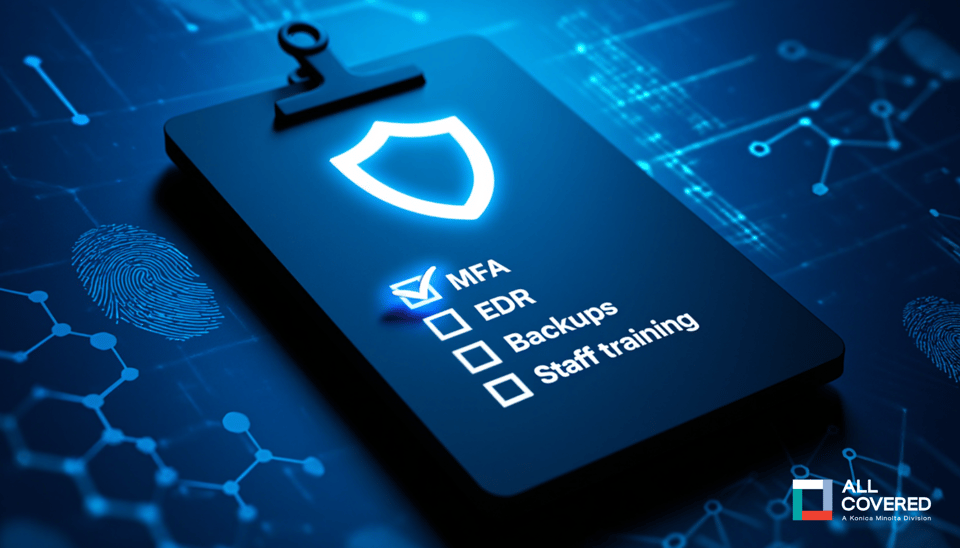
Cybersecurity for small businesses is no longer optional. As small companies rely on cloud applications, online transactions, remote employees, and digital collaboration tools, cyber risk increases across every part of the organization.
Small business cybersecurity must balance protection with cost control. Unlike large enterprises, small businesses often operate with limited IT staff and constrained budgets. The Global Cyber Security Market comprises technologies, processes, and services designed to protect systems, networks, and data from digital attacks, unauthorized access, and damage. However, cybercriminals increasingly target smaller organizations because they assume defenses are weaker.
Cybersecurity for small businesses requires practical, scalable controls that reduce exposure without overwhelming internal teams. With the right approach, even small companies can implement effective cybersecurity solutions and strategies that protect sensitive data and maintain operational continuity.
Why Cybersecurity for Small Business Is Critical
Small businesses are frequent targets of ransomware, phishing campaigns, and credential theft. Attackers increasingly target smaller organizations because they often lack dedicated security resources and formal incident response capabilities, making them easier to compromise and slower to recover. Attackers often view smaller organizations as easier entry points into supply chains or as standalone victims with limited defensive capabilities.
A single cyber incident can lead to data breaches, financial loss, legal liability, and reputational damage. For many small businesses, the impact is existential. Recovery costs can exceed available reserves, and some organizations are forced to shut down entirely after a major breach.
Research shows that a significant percentage of small businesses fail within months of a cyberattack, largely due to limited financial and operational resilience. A single cyber incident can lead to data breaches, financial loss, legal liability, and reputational damage. For many companies, recovery costs can exceed available reserves.
As a result of preventing attacks, small business cybersecurity protects revenue, customer trust, and long term business viability.
What Cybersecurity for Small Businesses Actually Includes
Cybersecurity for small businesses requires the prioritization of protections that reduce risk while staying within budget and operational limits.
For small businesses starting from scratch or improving existing defenses, implementation order matters. Based on real-world guidance from cybersecurity practitioners, organizations should prioritize controls in the following sequence:
- Security Awareness Training – Employees are the most common entry point for attacks
- Endpoint Detection and Response (EDR) – First line of defense on user devices
- Multi-Factor Authentication (MFA) – Protects against compromised credentials
- Incident Response Planning – Ensures rapid containment and recovery
- Microsoft 365 Security (if applicable) – Protects core business productivity platforms
- Centralized Monitoring (SIEM) – Enables visibility across systems
The table below expands on these foundational controls.
|
Security Area |
Why It Matters |
Practical Focus |
|
Risk Assessments and Asset Inventory |
You cannot protect what you do not understand. Identifying critical systems and sensitive data clarifies exposure. |
Inventory cloud apps, financial systems, devices, and sensitive data. |
|
Endpoint Protection |
Employee devices are common entry points for cyber attacks. |
Deploy antivirus, enable automatic updates, and monitor device activity. |
|
Secure Cloud Configuration |
Misconfigured cloud settings can expose files and administrative access. |
Review permissions, restrict sharing, and monitor login activity. |
|
Multi Factor Authentication |
Stolen passwords are a leading cause of breaches. |
Enforce MFA across email, finance systems, and admin accounts. |
|
Data Backup and Recovery |
Ransomware can halt operations entirely. |
Maintain encrypted backups and test restoration regularly. |
|
Employee Security Awareness |
Human error remains a top risk factor. |
Conduct phishing simulations and basic security training. |
|
Continuous Monitoring or Managed Oversight |
Threats evolve constantly and often go unnoticed. |
Use monitoring tools or managed services to detect suspicious activity. |
How to Build a Small Business Cybersecurity Plan
Improving cybersecurity for small business environments requires prioritization. Each investment should reduce measurable risk while supporting operations.
Many growing organizations strengthen their cybersecurity for small business by integrating protective controls with comprehensive managed IT services to ensure continuous oversight without expanding internal staff.
Identify Your Most Critical Assets
Small businesses should begin by identifying sensitive data, financial systems, customer databases, and cloud platforms. Understanding what must be protected determines where limited resources should be allocated.
For organizations that need structured guidance in identifying risk exposure and compliance gaps, dedicated security and compliance consulting can provide a clear roadmap aligned with budget realities.
Strengthen Identity and Access Controls
Compromised credentials are one of the most common causes of data breaches. Multi factor authentication across email, cloud applications, and financial systems significantly reduces exposure.
Role based access ensures employees only access the systems necessary for their responsibilities. These are cost effective cybersecurity best practices for small businesses.
Secure Endpoints and Cloud Applications
Most small businesses rely heavily on cloud platforms and employee devices. Endpoint protection software, patch management, and secure configuration settings form the foundation of strong small business cybersecurity.
Cloud environments should be reviewed regularly to prevent misconfigurations that expose sensitive data.
Implement Reliable Data Backup and Recovery
Ransomware attacks can halt operations entirely. Regular, tested backups stored securely ensure business continuity even if systems are compromised.
For small organizations, backup planning is one of the most cost effective cybersecurity investments.
Prioritize Cybersecurity Awareness for Small Businesses
Human error remains a leading cause of cyber incidents. Regular training helps employees recognize phishing attempts, suspicious links, and social engineering tactics.
Cybersecurity awareness for small businesses strengthens internal defenses without requiring significant financial investment.
Consider Managed Security Support
Many small companies lack in house expertise. Structured cybersecurity for small business supported by managed services provides monitoring, response guidance, and risk reduction without hiring a full security team.
With a managed security provider, small businesses can also gain access to a 24/7 Security Operations Center (SOC), a capability typically out of reach for smaller organizations.
For many businesses, consolidating managed IT (MSP) and managed security (MSSP) under one provider improves response times, reduces gaps between teams, and ensures faster resolution during security incidents.
Small Business Cybersecurity vs Enterprise Security: What’s Different?
Small business cybersecurity focuses on high impact essentials rather than complex architecture. The difference lies in scale and resource allocation.
|
Area |
Small Business Cybersecurity |
Enterprise Cybersecurity |
|
IT Resources |
Limited or outsourced |
Dedicated security teams |
|
Budget |
Phased and controlled |
Large allocated budgets |
|
Tool Complexity |
Essential layered tools |
Advanced layered architecture |
|
Monitoring |
Often managed externally |
In-house SOC teams |
|
Compliance Scope |
Industry specific |
Multi-framework governance |
Cybersecurity for small businesses prioritizes efficiency and sustainability.
Common Cyber Threats Facing Small Businesses Today
Small businesses face increasing cyber threats, many of which are becoming more sophisticated due to the use of artificial intelligence. AI is enabling attackers to create more convincing phishing emails, automate attacks at scale, and improve social engineering techniques.
Ransomware
Ransomware encrypts files and systems, forcing businesses to either pay a ransom or rebuild from backups. For smaller companies without tested recovery plans, downtime can last days or even weeks.
Reliable backups and endpoint protection significantly reduce the impact of this threat.
Phishing and Credential Theft
Phishing emails attempt to trick employees into sharing passwords or clicking malicious links. Once credentials are compromised, attackers can access email accounts, cloud platforms, and financial systems.
Multi factor authentication and employee training dramatically reduce successful phishing attempts.
Business Email Compromise
In business email compromise schemes, attackers impersonate executives or vendors to request fraudulent wire transfers or payment changes. These attacks rely on social engineering rather than technical exploits.
Clear verification procedures and restricted financial permissions help prevent losses.
Insider Errors and Misuse
Data exposure is not always malicious. Accidental sharing of files, improper permissions, use of unsecured devices, or the rise of shadow IT (including unauthorized apps and AI tools) can introduce significant risk without visibility from IT teams. Role based access controls and routine access reviews help limit unnecessary exposure.
Cloud Misconfiguration
Cloud platforms are powerful but often misconfigured. Public file sharing settings, excessive permissions, or unmonitored administrative accounts can expose sensitive information.
Regular configuration reviews and activity monitoring reduce this risk significantly.
Even with clear awareness of these threats, many small businesses struggle to implement consistent protection.
Common Cybersecurity Challenges for Small Businesses
Small businesses face structural challenges that make consistent security difficult. Limited IT budgets often mean security competes with other operational priorities, while minimal staffing leaves little room for proactive monitoring or formal risk management.
At the same time, rapid cloud adoption and remote workforce expansion increase exposure across devices, applications, and networks. Many small organizations also face growing compliance expectations without dedicated compliance teams. Effective cybersecurity for small business environments must account for these realities by focusing on practical, high impact protections that strengthen resilience without overwhelming internal resources.
Schedule a Small Business Cybersecurity Consultation
Frequently Asked Questions
How can small business owners protect critical data and customer information?
Small business owners should begin by identifying critical data, customer information, and other vital data stored across business computers and cloud platforms. Basic security practices such as implementing multi factor authentication, ensuring employees understand security best practices, and maintaining a strong culture of cybersecurity awareness, along with installing the latest security patches. These security measures strengthen protection without requiring enterprise-level budgets.
What are the most common cybersecurity threats facing small businesses?
Small businesses frequently face phishing attacks, phishing scams, malicious software, and unauthorized access attempts targeting their business network. A weak wi fi network or unsecured internet connection can increase exposure. Understanding the latest cyber threats allows organizations to implement stronger security practices and reduce the risk of a security breach.
How can small businesses secure their Wi Fi network and wireless access points?
To protect your business, secure the wi fi network by changing the default service set identifier, using strong passwords, and enabling encryption. Configure each wireless access point properly and password protect administrative access. Separating guest traffic from the main corporate network also improves maintaining security across connected devices.
Why is secure remote access important for small businesses?
With remote work and mobile devices, secure remote access is essential to protect customer information and business data. Using a virtual private network and implementing multi factor authentication helps prevent unauthorized entry into the business network. These security tools reduce exposure to cyber security risks tied to remote connections.
What should a small business incident response plan include?
An incident response plan should follow a structured framework such as NIST, including:
- Preparation: Training teams and defining communication protocols
- Detection & Analysis: Identifying and validating potential incidents
- Containment, Eradication, & Recovery: Isolating systems, removing threats, and restoring operations
- Post-Incident Activity: Conducting root cause analysis and improving response plans
It should also define clear reporting procedures for notifying internal stakeholders and, if required, regulatory authorities.
What basic security practices should every small business follow?
Small businesses should limit access to sensitive systems, create separate user accounts for employees, and regularly update operating systems and secure programs. Installing security apps and keeping antivirus software active across business computers helps defend against malicious software. Consistent identity management and password protect policies strengthen overall cyber security posture.