No matter how high the wall is, hackers still find ways over it.
And it’s not just outsiders to worry about. Employee mistakes and malicious insiders also pose a threat that no amount of perimeter control can help with.
In response, organizations are adopting the Zero Trust (ZT) security model.
ZT assumes that no user, device, or application inside or outside the perimeter is automatically safe. It stops the attack from spreading, whether the enemy storms the gates or sneaks in disguised.
Let’s break down what ZT really means and the actionable best practices for implementing it successfully across your IT environment.
What's a Zero Trust Security Model?
Zero Trust is a cybersecurity principle based on a simple rule: Never trust, always verify.
It contrasts with traditional security models that tend to trust users and devices that are already inside the network perimeter.
Instead, ZT treats every request for access, whether it’s internal or external, as suspicious until it’s proven to be safe.
This means that no user, device, or application is trusted by default. Every access attempt is authenticated, authorized, and continuously validated.
But why?
When internal users and devices are trusted by default, you’re vulnerable to lateral attacks from cyber criminals who have entered your system illegitimately. If an attacker gets in, say, through a stolen password or compromised device, they can move through the system unchecked.
But if each access attempt is continuously verified, even internal threats hit a wall. This approach blocks attackers from moving freely throughout your systems, even if they’ve breached one layer of your network.
Core Zero Trust principles include:
- Verify every request, every time, with multi-factor identity verification
- Assume a breach: Design systems to contain threats, not just block them
- Enforce least-privilege access controls so users only get the permissions they need
What Are the Pillars of the Zero Trust Maturity Model?
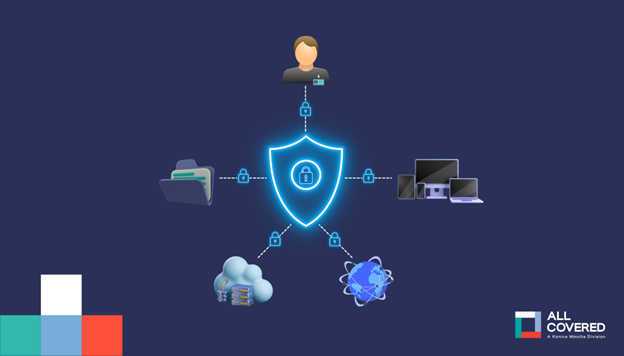
CISA's zero trust maturity model is founded on five pillars, covering the entire IT ecosystem from users to data. A successful zero trust implementation should include:
1. Identity: Verify users continuously and limit access to reduce the risk of lateral movement from stolen credentials. This prevents unauthorized access from becoming a full-blown data breach. Avoiding a breach is one of the most important aspects of ZT and the top priority for organizations implementing this approach.
2. Devices: Secure all devices, including laptops, phones, tablets, and servers. This will make it harder for an attacker to use these devices to get into your system.
3. Networks: Your network is the pathway for data. Use microsegmentation and encrypted traffic to stop threats from spreading, even after they've been breached.
4. Applications and workloads: Control access by role and context to reduce the risk that unsecured apps will expose vulnerabilities.
5. Data: Encrypt and restrict access to sensitive data. That way, even if attackers get in, they can’t get to it.
Key Benefits of a Zero Trust Security Model
A mature Zero Trust security model is key to a stronger all-around cyber security strategy.
Here are the benefits of putting ZT into action.
Improved Security Posture
Zero Trust enforces stringent identity and access controls across every user, device, and system. Every login, API call, and data request needs continuous validations, stopping attackers from exploiting weak spots.
Nobody gets a free pass, no matter their location, previous access, or role. This reduces breach exposure across your whole network and reduces the risk of non-compliance.
Limited Lateral Movement
If an attacker did manage to gain access through a compromised device or user, constant identity verification and microsegmentation blocks them from moving between systems.
This doesn’t just limit damage. It also gives security teams time to respond to threats inside the system.
Blocking lateral movement is such a key benefit that it’s the main reason 43% of organizations are adopting ZT.
Stronger Data Protection
Over half of companies transfer sensitive data regularly. This data is vulnerable if it’s not protected from unauthorized access.
A ZT approach encrypts data at rest and in transit. It only grants access once it’s verified the user, user behavior, and device.
Reduced Risk from Insider Threats
ZT security catches insider misuse early, which is crucial, as 93% of security leaders view insider incidents as harder to detect than external attacks.
Continuous user authentication and behavior analytics, combined with least-privilege access, block misuse by detecting abnormal patterns like unusual login times or unauthorized data access.
This flags users attempting to access systems outside their role, escalate privileges, or extract sensitive data.
Easier regulatory compliance
Forty-three percent of organizations say that Zero Trust improves regulatory compliance.
With its strong security policies, automated logging, and accurate audit trails, ZT supports regulations and frameworks including GDPR, HIPAA, CJIS, and NIST SP 800-207.
Business agility
ZT approaches allow businesses to be flexible and responsive to change, and 45% of organizations agree.
This is because ZT offers perimeterless security without loosening protections. By securing remote work, Bring Your Own Device (BYOD) setups, and cloud adoption, users can safely connect from anywhere, enabling better business agility.
Why Zero Trust Is So Important Today
Modern IT environments are sprawling and dynamic. This makes them harder than ever to defend.
The rise of remote work, cloud adoption, and IoT devices means the traditional network perimeter is disappearing. While this makes businesses more flexible, attackers have more entry points to infiltrate your system. This is why 30% of companies now prioritize Zero Trust: to manage attack surface expansion.
It’s not just that your team has more devices and is more distributed than ever before. Supply chains are also getting more complex.
And with more third-party vendors comes even more attack surfaces. One weak link in the supply chain and an attacker can find their way into your systems through the connections you have with your vendors.
And it’s common: 80% of companies have already suffered identity-related breaches due to a supply chain attack.
At the same time, AI-driven threats are changing the game.
Advanced technology makes attackers faster than ever. Once inside, it takes just 48 minutes on average to go from access to lateral movement. AI automation and generative AI (GenAI) allow attackers to craft more precise, targeted threats at scale. Automated exploits, zero-day vulnerabilities, and advanced phishing allow attackers to find what they’re looking for quickly, without the need for deep technical skills.
Worse still, the rise of cybercrime-as-a-service makes it even simpler for bad actors to launch devastating attacks with minimal effort.
Lastly, comes the issue of compliance. Regulations are tightening and evolving. Businesses that fail to evolve to meet new regulations risk non-compliance fines and legal issues.
Best Practices for Implementation to Secure All Zero Trust Pillars
Want a strong ZT architecture? You need to secure every pillar.
Here’s how:
Secure Your Workforce
Verify users at every step to prevent credential theft and unauthorized access:
- Apply Identity and Access Management (IAM) and Privileged Access Management (PAM) controls
- Use Single Sign-On (SSO) and identity federation
- Enforce Multi-Factor Authentication (MFA)
- Continuously monitor user behavior
Protect Every Device
Every endpoint can become a potential entry point for cyber threats. Strengthen your endpoint security by blocking untrusted or compromised devices before they connect to your network.
- Use Endpoint Detection and Response (EDR), Mobile Device Management (MDM), and Continuous Diagnostics and Mitigation (CDM) tools
- Verify hardware with Trusted Platform Modules (TPMs)
- Enforce posture checks (e.g. patch-level, antivirus)
- Maintain real-time device inventory
Isolate and Control Networks
A flat network is like a building with no locked doors. Once inside, attackers can roam freely. Segmentation creates internal barriers to prevent threats from spreading:
- Use Zero Trust Network Access (ZTNA)
- Apply microsegmentation
- Encrypt all internal traffic
- Monitor east-west traffic
Shield Applications and Workloads
Apps are common breach points. Control how and when users access apps to reduce risk:
- Deploy Web Application Firewalls (WAFs), proxies, and API policies
- Enforce role- and risk-based access
- Scan and secure DevOps pipelines
Safeguard Sensitive Data
Encrypt everything and restrict who can access critical information:
- Automate data encryption in transit and at rest
- Use Data Loss Prevention (DLP) tools
- Review access regularly
Partner With a Managed Security Service Provider (MSSP)
Remember that you don’t have to build a Zero Trust architecture alone. A trusted MSSP offers proven expertise, tools, and processes, along with round-the-clock coverage to accelerate your strategy.
This streamlines adoption of tailored ZT design without expanding your internal team. It gives you expert threat response, easier regulatory compliance, and continuous security improvements in a more cost-effective way.
Ready to make zero trust achievable for your business?
Talk to All Covered today to build a smarter, stronger security foundation that evolves with your needs.